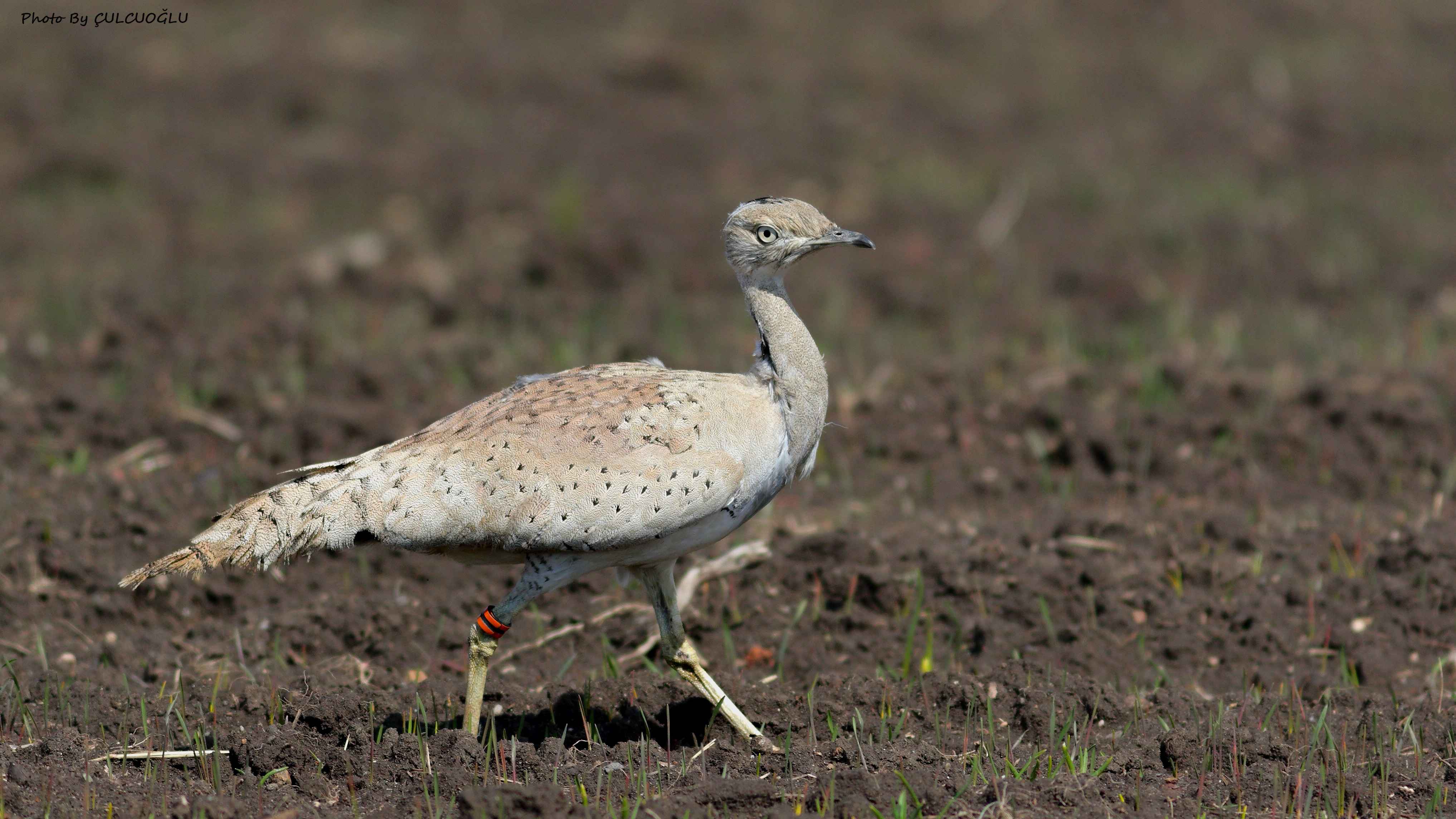
Yakalı toy
Chlamydotis macqueenii5 gözlem5 gözlemci · 2 ilGözlem haritasına git ↓Genel bilgi
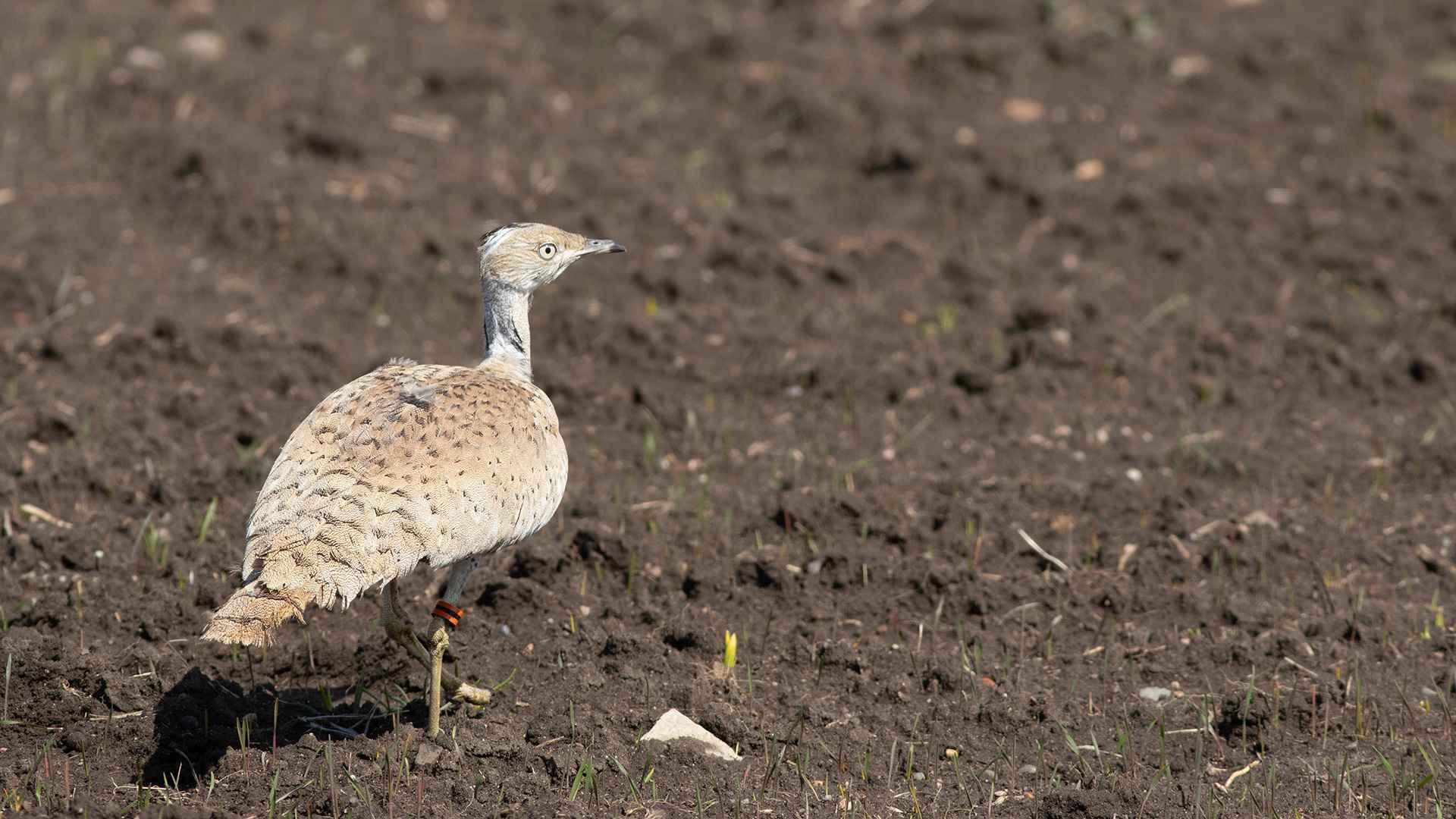
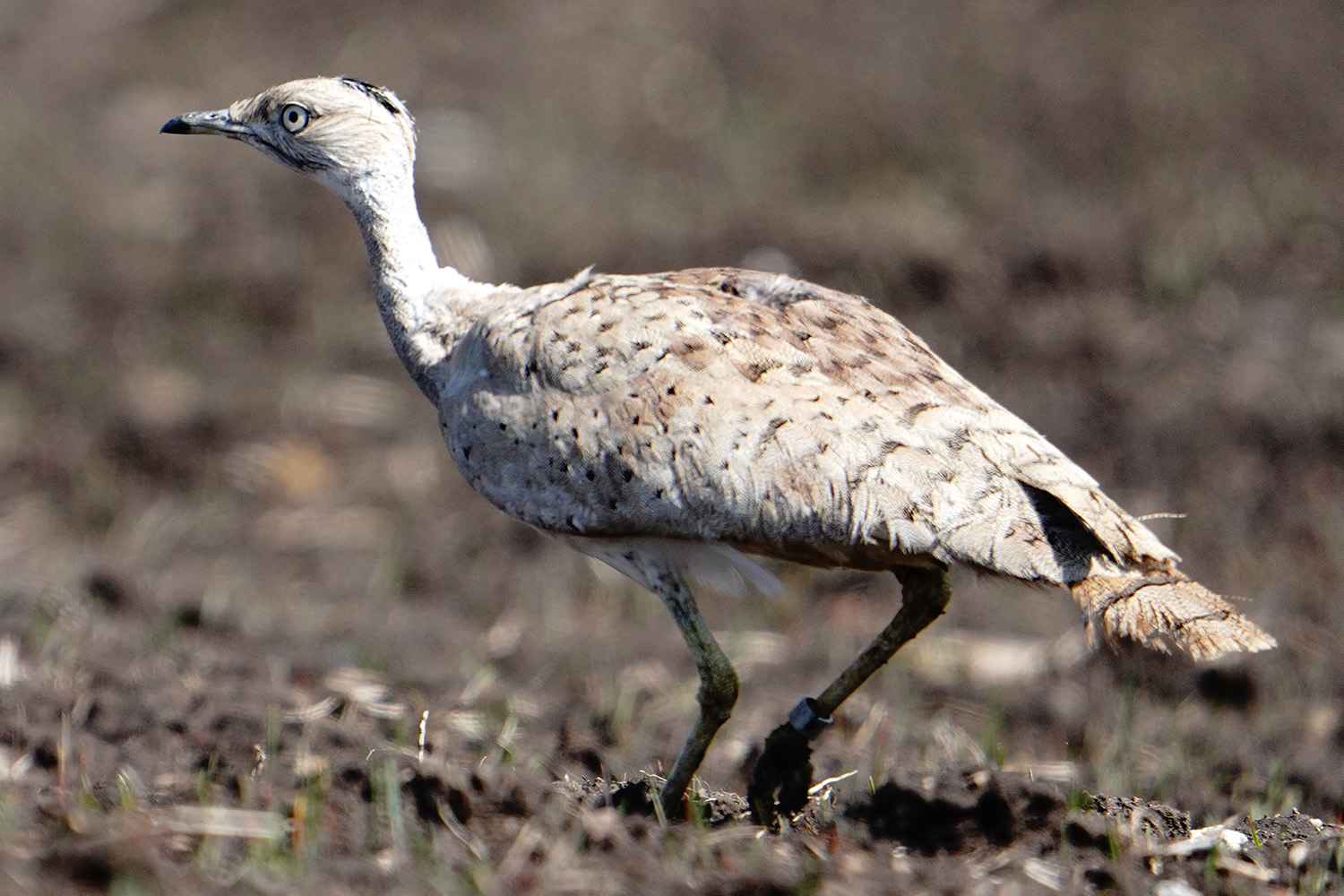
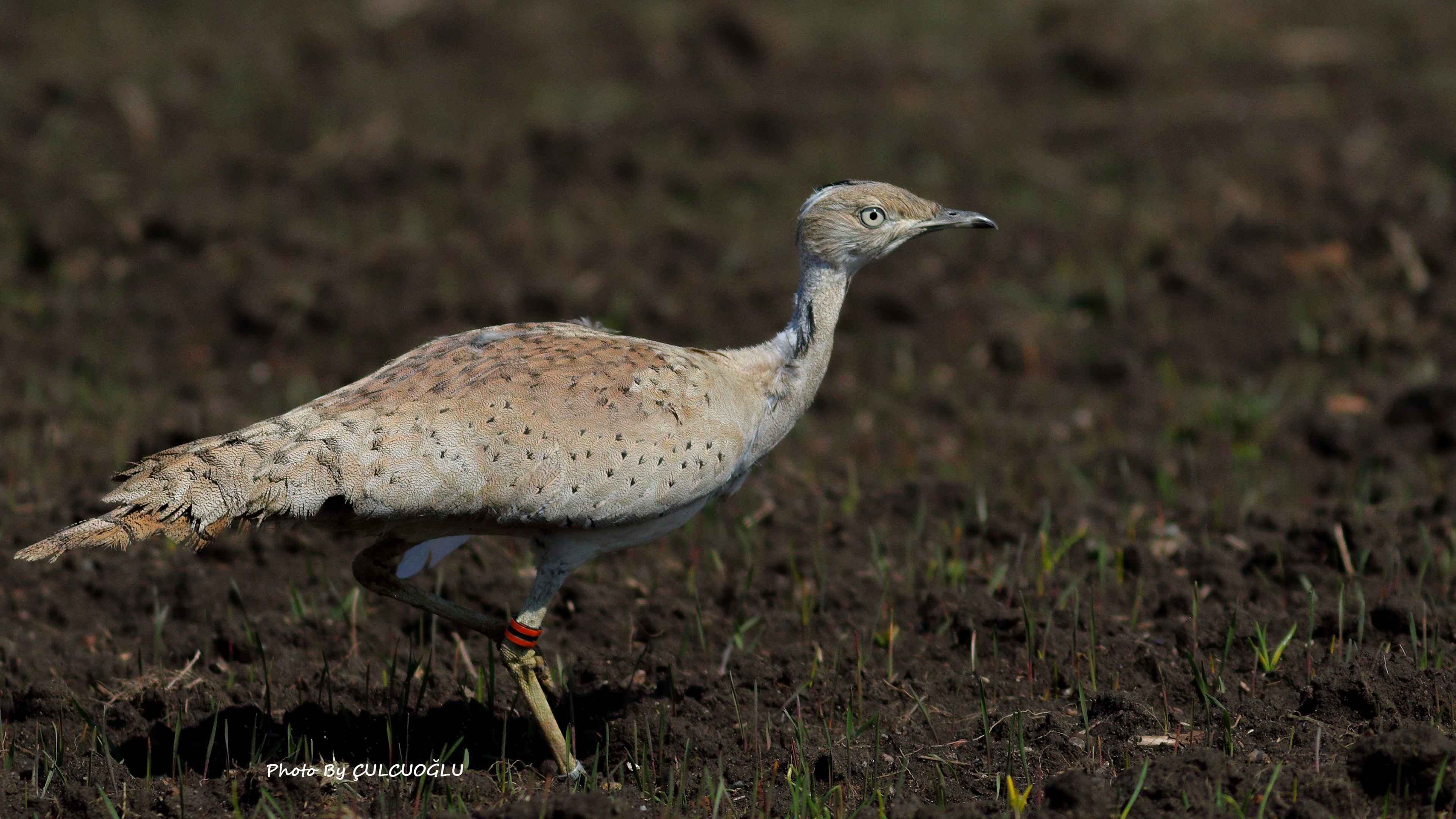
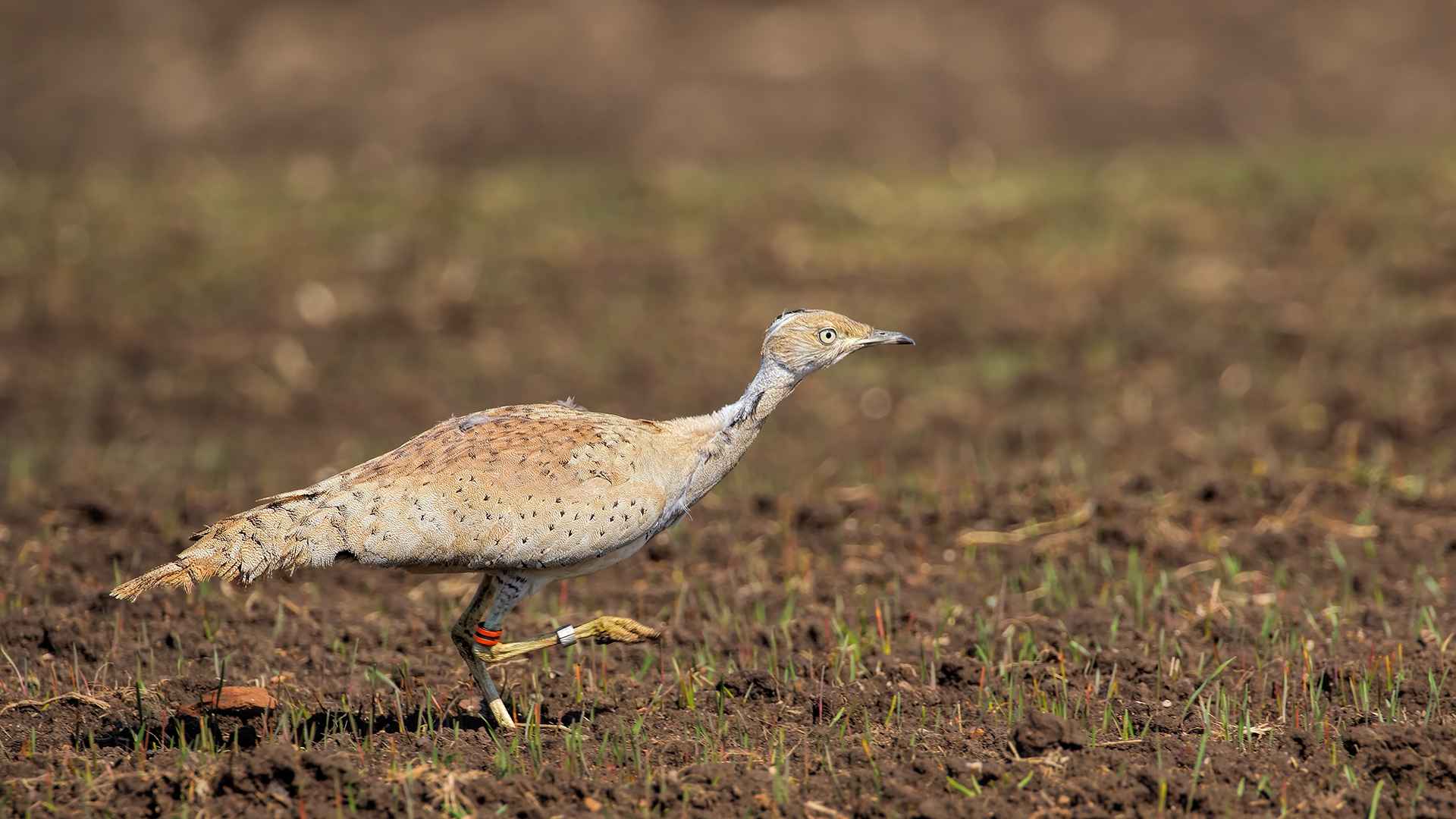
Chlamydotis macqueenii, Toygiller (Otidae) familyasına ait bir kuş türü. Daha önceleri Kanarya Adaları ve kuzey Afrika'da görülen hubaranın Asyalı alt tür olarak kabul edilirken şimdi, ayrı bir tür olarak ayrılmıştır. Bunlar, Chlamydotis cinsinin tek üyeleridir. İki türün arasındaki çizgi ise Sina Yarımadasıdır.
Habitatı
The Asian houbara occurs from the east of the Sinai Peninsula to the Caspian Sea and extending east to the Gobi Desert in Mongolia. and in the dry arid zone of western India. Vagrants have historically been found as far west and north as Britain and as far south as northern Kerala. Possibly the last of these vagrants visited Suffolk in November–December 1962. The Asian houbara breeds in deserts and other very arid sandy areas. Its habitat in Saudi Arabia is very dependent on good vegetation cover and tended to be found in areas with dense growth of scrub vegetation, particularly Capparis spinosa. A study in the steppes of Iran found that nest sites were chosen mainly in locations with high d…
Yayılışı
The Asian houbara occurs from the east of the Sinai Peninsula to the Caspian Sea and extending east to the Gobi Desert in Mongolia. and in the dry arid zone of western India. Vagrants have historically been found as far west and north as Britain and as far south as northern Kerala. Possibly the last of these vagrants visited Suffolk in November–December 1962. The Asian houbara breeds in deserts and other very arid sandy areas. Its habitat in Saudi Arabia is very dependent on good vegetation cover and tended to be found in areas with dense growth of scrub vegetation, particularly Capparis spinosa. A study in the steppes of Iran found that nest sites were chosen mainly in locations with high d…
Beslenme
Bu başlık için doğrulanmış kaynaklı bilgi henüz eklenmedi.
Biyoloji
Bu başlık için doğrulanmış kaynaklı bilgi henüz eklenmedi.
Göç
The migrations of the Asian houbara have been tracked using satellite transmitters. Mongolian birds leave the wintering areas in Afghanistan and Pakistan from mid to late March and arrive in their breeding grounds after about two months of flying, taking a path that avoids the high mountains of the Himalayas. They fly about a day and cover a total of with stopovers along the path. They spend about four months in their breeding territories before setting off again and reach their winter grounds from October to December. Satellite tracking of 48 individual houbaras across multiple migrations showed that this species uses the local temperature to time their spring migration departure.
Popülasyon
Conservation efforts were made across the region after the 1970s with international conservation organizations working along with local governments. Some captive breeding facilities were created including one in Saudi Arabia in 1986 and have been successful in captive breeding since the late 1990s, initially by incubating eggs collected from the wild and later entirely in captivity using artificial insemination. Captive-bred birds are considerably more inbred and may be susceptible to diseases. Being migratory species, it is important that captive-bred bustards undertake similar migrations as wild birds. Comparing the migrations of captive and wild birds using satellite telemetry, it was fo…
Davranış
The male houbara displays initially with the neck upright and the feathers on the base of the neck erected. A few feathers on the head are also erected while walking slowly, with one foot moved carefully and placed just ahead of the other. This is followed by a more vigorous phase of running either in a line or in a circle around a few bushes while the neck is tucked back into an "S". The neck feathers are erected and cover the head. The feet are raised in a measured gait and the neck is swayed from side to side. A low sound of breathing may be heard but only at close range. Males will call during display and if there are no potential mates, the display may be repeated. When a mate appears t…
Ötüş
Bu başlık için doğrulanmış kaynaklı bilgi henüz eklenmedi.
Kaynaklar
- Chlamydotis macqueenii — WikipediaWikimedia Foundation